Tuesday, March 3, 2009

The 333 Best Pop Songs of the 2000s: #167

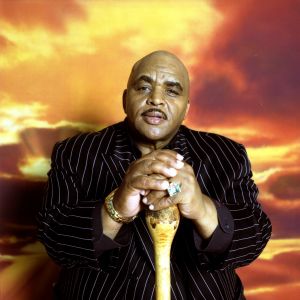
#167: "Wish I Was in Heaven Sitting Down" (2001) - R.L. Burnside

I first encountered R.L. Burnside's signature Delta blues in 1991, on the soundtrack to the film Deep Blues, a documentary about contemporary blues musicians living in the Delta (area of Mississippi). The documentary was inspired by music journalist (not the singer) Robert Palmer's excellent book (of the same name) on Mississippi Delta blues, a book I'd read in high school, sometime in the mid-'80s (the book was published in 1981). Back then, I'd already immersed myself in the music of the traditional blues artists, as well as more modern blues artists (including most of the entire round-up of Alligator Records and Malaco Records blues artists, not to mention the more popular Stevie Ray Vaughn and Robert Cray), so when I read about the film being made, I was excited. I couldn't wait to see the movie.

Well, I was wrong. I could wait to see the movie*, as I never saw it listed as playing in my state (not to say that it didn't play in my state, but just that I never saw I listing for it anywhere, and I looked). I did, however, manage to drive to Jackson to buy the soundtrack. I listened to the cassette--twice--the entire hundred-mile trip back home, and the music just floored me. This wasn't the sound of the new blues I'd been listening to; this was something entirely different. It was rawer and (thereby...sort of) more powerful than any contemporary blues I'd ever heard.

This must be, I thought, what the blues must have sounded like back when Muddy Waters and Howlin' Wolf first unleashed their early records: primal, hard-core, gut-bucket blues, music that grabbed your crotch and soul at the same time, music that forced you to pay attention, that struck a primordial groove and held it, refusing to change chords, refusing to let go, until you understood...until you understood not what these musicians had been through ('cause you couldn't, 'cause you didn't live their lives--Thank God!), but until you understood that they'd been through these times and lived to tell their tale. These songs demanded a congregation, because these folks were there to witness, and they demanded we listen, 'cause someone needed to take note, and that someone was me.

On the album (which has sadly been discontinued, though you can find it cheap), the first two tracks completely astounded me. The second track is"Jr. Blues" (which was subsequently retitled as "All Night Long" for release on his solo album) by the late Junior Kimbrough, and it contains possibly the best bass/guitar (I'm not sure which instrument it is--really, as it sounds like a hybrid of the two) blues riff of the past thirty-five years. In a year-or-so, when I start writing my best songs of the '90s list, I'll riff more on that riff, as that song places high, as does the first track of the Deep Blues album, "Jumper on the Line," (later re-titled "Jumper Hanging Out on the Line")by R.L. Burnside.


What both "Jumper on the Line" and "Jr. Blues" do is take a lick and run it straight through the song with no chord changes. What this type of song structure--one riff with no/little variation--provides is a holding pattern--a vamp--onto which the singer (in blues it's the singer, but when rock or jazz employ this strategy, it's the musicians that do this) can improvise. Burnside and Kimbrough utilize this instrumental monotony to allow the groove and feel of the song to sink in deeply so that the lyric and vocal can be felt deeply; it's like those of us who study or write (or whatever) better when there's some background noise. This concentrated and repetitive sound drowns out any inessential information and allows for focus, allows us to more fully enter into whatever world we're trying to enter. In other words, the vamp is used by Burnside and Kimbrough to hypnotize the listener, to drag us into their world by taking us out of our own, as the repeated groove eliminates everything else except the performance. It's singular, and it's demanding.

It's not new, this vamping style of Burnside and Kimbrough. Not completely. Burnside's and Kimbrough's sound comes--primarily--via Muddy Waters and Howlin' Wolf. Waters and Wolf developed their sound**--the Chicago Blues sound (even though both originally hailed from Mississippi--by removing some of the chord changes inherent in the (more acoustic) country (Delta) blues style (which owes its half its origin to European ballads***) in order to give the new music more drive and more power. What Burnside (whose sound comes more from Waters) and Kimbrough (whose sound comes more from Wolf) do is take the (early) Chicago Blues sound and strip it down even further, taking out even more chord changes, leaving only one or two--and ofttimes none.

This new Delta Blues style was, to me, almost revelatory, as with a musical history and sound as singular as the blues, very little musical change is ever expected or predicted, and what we have here is something new in a world where that hasn't been anything new in almost forty years. So, I did a bit of researched, asked around, called around, trying to find something either Burnside or Kimbrough, and back then, in 1991, I could find nothing. Nada.

A few years later, I read a review of Kimbrough's debut album in Rolling Stone, and I was excited, as well as a little dumbfounded. Debut? Really? Yes, really. I searched for that album in nearby record stores (and Wal-Mart), and I couldn't find it. I asked a few record stores if they could order it for me, and they politely dismissed my request, for they hadn't heard of the record, nor of the artist. Well, somehow, I eventually tracked down Fat Possum records (out of Oxford, Mississippi), and they sent me a catalogue (which, back then, looked less like a catalogue than it did a flier), and there was Kimbrough's record, and...they had one from R.L. Burnside as well. Alright!

Soon, toward the middle of the '90s, both artists' reputations began to grow statewide and then nationally. In '96, Jon Spencer (of the Jon Spencer Blues Explosion) took a liking to Burnside's music, and the two combined forces and toured and recorded together, and Burnside's popularity began to soar (relatively, that is). Going to Chulahoma to Kimbrough's juke joint began to be the new "in" thing to do, especially if Burnside was going to be there. His records started to sell, and I started seeing national ads promoting them. Then, in '98, Kimbrough (who never became anywhere near as popular as Burnside, though I don't know why) died, and then his club burned down, and then Burnside stopped recording. Period. No more. He'd stopped drinking at the same time, and I believe I read an interview with him once (though I don't remember where or when) where he stated that his sobriety affected his playing/songwriting ability. Huh. Usually, it's the other way around, but go figure. He still toured, though.

In 2001, Fat Possum released the last album containing new Burnside material: Wish I Was in Heaven Sitting Down. Like all of Burnside's albums of the previous six-or-so years, the results were mixed. Burnside liked to tinker with his material (or either he allowed his producers the leeway to do so), and--usually--on about (at least) every other song, contemporary R&B/hip-hop/nu-rock production and/or arrangement would be tacked onto the song, and the results varied...from bad to worse. Okay, that's hyperbole: some of the hip-hop/blues songs worked well; most didn't, though, and when they misfired, they misfired by miles.

What did work, though, was Burnside being Burnside--either with a traditional jump-blues backing band (usually his sons), or by himself. On the title track of the aforementioned 2001 album, Burnside accompanies himself on guitar. His voice, here, deeper--and wearier--than it was back in 1991, back when I first heard him. His signature style--the modern day Delta Blues vamp--has receded, leaving Burnside's voice as the only distinctively Burnsidian aspect of the song. He's regressed his music back to its original Delta Roots, back to the days before Waters and Wolf, back to Robert Johnson and Son House, back to their songs of impending doom, of death letters and hellhounds on their trails.

Here, Burnside repeats the title multiple times, as if he was hoping he could make it so by wishing, by chanting, as a mantra, as if he stops wishing, stops chanting, that it might not happen. He also asks for redemption, for the Lord to "take away [his] sin and give [him] grace," sounding like a man who either knows his end is coming soon (Burnside had heart surgery in 1999, and never completely and healthily recovered, and would die in 2005) and is afeared that he'll suffer eternal damnation if not forgiven and saved before his time comes, or a man who's too long for this world as he's tired and weary and in pain and has had enough. Burnside's powerful vocals (made all the more effective by their imperfection) are earnest to the point of being nigh-confessional, as if the microphone was his alter, and we--the listeners--his priest, here not only to bear witness but also to transfer the message. And we do. But we're not sure if the message was ever received, 'cause Burnside's still here, opening up his soul, praying to the Lord and us, and the only thing we can do is grant him an audience...and if we listen to him one more time, then maybe, he'll find the peace he wants, 'cause if he doesn't, then his sin is on us, but we'll take it, 'cause he's there, too.


NOTES


*I finally saw Deep Blues about four years ago, on either IFC or the Sundance Film Channel. It's worth a watch, and I enjoyed it, but the movie didn't delve as deep into the music and history of these musicians as I'd hoped it would, though as a document of what life was like back then (and, from what I hear from people who know the area, still is) in a poor Mississippi town, it was an accurate depiction.


**Waters's and Wolf's style--the Chicago Blues sound--is as much the product of Willie Dixon as it is Waters and Wolf, as it was Dixon who wrote some of their earliest, best, and most influential songs. Dixon's talent and influence as a songwriter knows few equals, but as a recording artist and performer--especially the latter--he wasn't very distinctive, certainly nowhere near as distinctive as either Waters or Wolf.


***Which goes to show you that musicians will "steal" from whenever and wherever they can legally**** get away with it. So, the next time you hear someone complaining that all Elvis or Eric Clapton or the Rolling Stones did is steal the black man's music and put a white face on it so that the richer white folks would by it, tell this person that he/she is correct, and that the black people who were robbed also robbed people (musically) themselves, both white and black. It's always been this way, and it ain't changing anytime soon, either. Musicians will take whatever they know to be great, call it an "influence," and make their own music using someone else's...until, of course, the takers--the robbers--start tweaking that sound to make it fit themselves, start adding a bit of this and that, and then they have developed their own sound, which someone later will subsequently take, etc....


****They'll do it illegally, too. Just ask George Harrison*****. Or the Beach Boys. Or M.A.R.R.S.


*****Actually, considering Harrison is dead, it might not be a good idea to try to exhume his corpse in order to be able to do that.

Monday, March 2, 2009

The 333 Best Pop Songs of the 2000s: #168

#168: "That's How I Got to Memphis" - (2006) - Solomon Burke

Last week, my wife Foot Foot handed me a journal she found that I'd written about twelve years ago, before we married. She asked me to go ahead and look through it--right then! Uh-oh...something's up. What in the world could I have written in there to have behooved my missus? Oh, dear.

I had no idea, for I hadn't looked at that journal since...heck, I don't even remember writing in it. I flipped it open, and I asked her what particular page or pages she wanted me to read, and she told me the first two. I opened up to the first page, and she immediately reached over and flipped it over and pointed to the middle of the page and exclaimed, "That right there!" I'd written, "I wonder how _______ is doing. I haven't heard from her in awhile."

"See what I mean?" my wife asked. I shook my head.

"Is that all?" I asked.

"Yes," she responded.

"And, what, didn't I write something about you in here?"

"Yes, but you mentioned her last!" she said. Sure enough, she was right. I flipped through the rest of the journal (I'd only written in about two more pages--yeah, I sure was prolific), and I saw no mention of my wife after the last mention of ________. I flipped to the front and skimmed, and I did see that I mentioned my wife...first. Heck, I even speculated (in the journal) about what I could do to win her love. I dropped her name twice, too.

Didn't matter much, though. Foot Foot needed to be Donna Summer, Floyd Cramer, and Robert Johnson. She needed to be the last dance, the last date, and the last fair deal gone down. And she was, I tried to explain to her. Look whom I married, I tried to tell her.

"You didn't think so then," she said. Yeesh! What's a man to do? "You were going to follow her to _______!"

"But I didn't. I stayed here and married you," I said.

"Hmph. Bet you wish you would have gone. Bet you regret not going," she said, and then our two-year-old daughter demanded to be released from the confines of her carseat, and that particular conversation ended.

I've thought before--and not in a long time, not until now--about how my life would have been had I hightailed it north from Mississippi, leaving the life I knew to follow what I once thought might have been--or could have been, or could have turned out to be--love. What would have happened had I followed that girl and the situation not have gone like I'd have wanted it to go? What if the romance were to be doomed? Would have I turned tail and slipped back home? Would have taken that midnight train to Mississippi, back to the world I would have left behind not (to what would have been) so long ago? Would I have traveled elsewhere? Or would I have stayed put there, abandoned?

The latter's the case with the protagonist in Solomon Burke's rendition of the forty-year-old Tom T. Hall country-blues lament (it's been recorded previously by country artists Deryl Dodd, Lee Hazelwood, Buddy Miller, Bobby Bare, and by Hall himself), "That's How I Got to Memphis." The song--and it's a great one, as are most of Hall's during his prime--is the hard luck version of "Midnight Train to Georgia." Here, the tragedy inherent in the Knight song deepens. In the Knight song, the protagonist would rather live in her lover's world than without the lover in her own world, so she follows him home. In the Hall song, once the protagonist arrives, the lover leaves. Ouch. Sounds like it hurts, doesn't it? It does when Solomon Burke sings it.

Burke's voice was once both booming (he started his professional career as a pastor) and supple, as evidenced by this soul pioneer's vocals on his soul hits "Everybody Needs Somebody to Love," "Down in the Valley," "Cry to Me," and "Just Out of Reach (Of My Two Empty Arms) (which was a country cover, too). The years and the concerts and the Sunday sermons have taken a toll on Burke's voice, but that aged and worn quality serves him well here, as that ragged quality bespeaks of years of the blues. Burke must surely realize this, as he drops the volume in his lines at the end of each verse, some ending in barely a whisper. Burke's technique and the record's spare production lend creedence to the heartbreak in the lyric, the saddest part of which isn't that his lover's left him, but that he's determined to still see here again...by waiting for her to come back.

Right at the end of the song, Burke accomplishes something pretty special, something rarefied that only the best actors can accomplish. In the matter of just four recitations of the same line, with just the slightest change of inflection, Burke displays grief, resignation, defiance, and the self-effacing humor that often comes with acceptance. It's tragic and shattering and, ultimately, life affirming, as the once-bemonikered King of Soul plumbs the depth of the soul of a man who suffers a rejection that for most would be life altering. It's to Burke's credit--and Hall's, too, as this interpretation was always present in the lyric (though, until Burke, not the interpreter)--that this song can show us how strong a soul can be, how resolve can overcome whatever life and love and fate and former lovers may throw our way.

"If you love somebody enough/You follow them wherever they go," Burke sings here, and he's right. He knows. Tom T. Hall knows, too. As do I. Resolve and love and loyalty will take you anywhere, to follow the one with whom you can't live without, whether that be Memphis, Georgia, _______, or right here in Mississippi. Love can travel the world, but it doesn't always have to. Sometimes the midnight train leaves the same day it arrives and in the same location. Sometimes, she doesn't leave Memphis. Sometimes, she waits for you just as you wait for her. If she'd have left, you'd have followed, but sometimes she doesn't leave; she just reads your journal instead.


Friday, February 27, 2009

The 333 Best Pop Songs of the 2000s: #169

#169: "What Goes Around...Comes Around" (2006) - Justin Timberlake


More than a little late with today's pick, for last night I spent about six hours trading blows with my computer. About 1:30 in the morning, I was still unable to successfully log onto the internet without the vicious and rabid faux-virus alerts attacking me left and right, so I finally conceded the match. This afternoon, after work, the computer and I held a re-match, and after several lengthy rounds in which both of us scored some vicious hits, I finally, about six o'clock, scored the knock-out punch, ridding myself of the malacious malware that had refused to go away, insistant as it was to lodge itself in my computer and my life without ever letting go.

Justin Timberlake's #1 single "What Goes Around...." jabs and parries with the same dogged stubborness as that of the malware I finally knocked out of my computer, the song's electrobeat (whose sythesized hi-hat sounds almost identical to the hi-hat sound in Salt N' Pepa's "Push It") pulsing and rolling, without any of those end-of-the-chorus halts that, for me, just ruined what was otherwise a great song in Timberlake's first solo hit "Cry Me a River." Those start-and-stop beats are also one of the reasons I hated having to hear 'N Sync, especially on "Bye, Bye, Bye."

Now, I know 'N Sync had its critical defenders, but I just couldn't stomach the product.* Timberlake's vocals in the group...well, from all the shinola the producers (yeah, I could probably find out who they were, but I'm not wasting any more time on that group than I have to), layered on top of their songs--which were all but unavoidable on radio or television--I couldn't tell one voice from another. When I heard he'd be launching a solo career at the beginning of the new millenium, I wondered how many fans this new David Cassidy would be able to carry with him into a new generation.

I heard "Cry Me a River," and--for reasons stated above--I didn't like it. It annoyed the stew out of me; however, this time around, I could discern what some of the fuss was about: Timberlake could sang. Now, he only needed Timbaland (who produced Timberlake's first record) to provide him with a genuine groove. On "What Goes Around...." he does so.

The song's opening lick--played on a oud, though at first I thought it was a sitar--the funky little blues squiggle, open things up exotically, and when the beat comes in, the exotic twists into the erotic, and the strings come in, and they perpetuate the erotica, giving the song a classy sound, without taking away any of the sensuality. Then, during the verses, the oud gives way to an electric guitar, played with some slight reverberation, and--even before Timberlake begins singing--his music has evolved from trendy juvenalia into classic mature R&B, without losing any edge, remaining fresh throughout.

Timberland does start singing though, and his vocals here are even better than they were on "Cry Me a River." He's both smoother and more instinctive, his interjective "uhh"s and "hey"s masterfully timed. His forays into falsetto are better here, too, as he injects them with more energy and more soul, his iambic rhythms more pronounced. He's utterly his own being on this song, as what he brings to the song this time is (at the very least) equal to what his producer brings, not the servant of the product. Or a product. Timberlake and Timbaland, here, have created a modern-day Philly Soul classic, one that'll last a thousand years, that'll be played in wedding receptions and class reunions for eons to come because, if for any one reason, Timberlake has struck a groove that just won't let go. I warn, though, that if you play the track on your computer, you may never be able to get it off. Just go ahead and throw in the towel.


NOTES

*Mind you, now, that this critique is not coming from a man who hates on boy bands. In fact, I loved at least one of The Backstreet Boys' songs, and I also think Hanson is criminally underrated. I don't hate the game; I just hate individual playas of the game.

Thursday, February 26, 2009

The 333 Best Pop Songs of the 2000s: #170

#170: "Inside of Me" (2006) - Starlight Mints

Next weekend, Watchmen opens in theaters nationwide, and in preparation, I've been re-reading the trade paperback of the Alan Moore/Dave Gibbons twelve-issue comic book series. Now, Watchmen premiered in 1988, a year or two after I stopped reading and collecting comic books (and I didn't start again until five years ago), so I never read it when it debuted, and I had never heard of it until I started reading comic books again about five years ago. Oh, but what I missed.


Watchmen--whose surface premise centers on the mystery surrounding the murder of an aged and amoral superhero (though the comics are about much, much more)--is routinely hailed as one of the best--if not the best--comic books ever produced, though it does have its share of detractors. While fans and critics may disagree on the book's greatness, what's usually agreed upon is the comic's seminal influence* on the entire comic book industry. In the comic, Moore (and Gibbons) look at superheroes from an objective, distanced standpoint, and they attempt to portray how superheroes might really function, over time, in the "real" world, and the results ain't pretty, as the creators don't objectify these costumed individuals. They look at them as complex individuals, with all the ticks and flaws inherant in even the best of us, and what they display is sad, heartbreaking, and tragic.

So far, in my re-reading, I've just finished the fourth issue, and the character that most fascinates me is Doctor Manhattan, the focus of the fourth issue (and part of the third). Jon Osterman is--in tried-and-true comic book form--an "ordinary" scientist who's transformed by a (formulaic, but that's the point) mishap into a superhuman being who can teleport, walk through walls, and re-arrange matter on a molecular level--meaning, basically, that he could transform physical reality into whatever he wanted it to be. As Moore and Gibbons present him, Osterman--before transformation--is a pretty straight board, not quite a milquetoast, but not possessing of a very strong or social personality, either. After his transformation, Osterman's personality doesn't actually seem to change very much, as he's very distanced and cerebral and analytic, all traits that Osterman held in the first place.


There's a subtle change. Osterman--as Manhattan--just doesn't seem completely human, as if he's lacking some small ingredient. He's like those computer-generated cartoons of people, like those found in the early days of Pixar movies, those that certainly look and behave like human beings, but they're just off enough to cause a general sense of unease. There's a disconnect there; something's amiss, as if just underneath the surface, there's a mysterious being or world or abyss waiting for us to come close enough to grab us and turn our nightmares into reality.


It's this type of surreal disconnect that I find running underneath the current of the Starlight Mints' "Inside of Me." It's a flawless pop song, with hooks a' plenty, but it's not too saccharine: the glossy production still brings the rock via Duane Eddy-like reverberating and shimmering distorted guitar, the "Werewolves of London" rolling piano, and through the drummer's steady back-beat, and the hooks are distributed well and given space to work their magic without overwheming the senses.


The song's nothing new, nothing revolutionary, and is very reminiscent of the art-pop work of Robyn Hitchcock and Crowded House and the Flaming Lips. The record sounds like it could have been made in the '90s, or the '80s, or the '70s (not before, though, as the background vocals and harmony style are too Jeff Lynne-like to have existed before ELO started in the mid '70s). That's not to say this record's completely derivative, 'cause it's not; in fact, I can't think of any glossy, uptempo, pop-rock songs that are quite like this one. What makes this record so unique?

"Inside of Me" possesses the damnedest quality of being happy, catchy, and utterly creepy. I think the creepy quality comes from the sum of several different factors: the reverberating guitar (and the production that, a couple of times, lets the guitar reverberate all by itself with no other sound surrounding it); the horror fun-house piano that cascades up and down the scale, a very Caligari-esque quality (not the piano's sound, though; just the constant chords going up and down); the indecipherable nature of the background vocals, sounding like some old ELO vocals being played backwards; the singer's sliding phrasing at the ends of the verses; and snatches of the cryptic lyrics ("Come inside and be my skin and bones," "We could fall on through," "The mess that breathes inside me"), which are almost assuredly about the speaker wanting a companion to "complete" him...but they don't come across that way.

The lyrics--at least the ones that I could decipher the first time I heard the song--seem to be issued by one who's ready to descend into some world that is not the one we know, some Lovecraftian universe that's out of colour and space and time, just as Doctor Manhattan is, essentially, out of colour and space and time. He basically lives inside his own quantum field that touches upon all moments upon his own timeline all at once. Manhattan--for all intents and purposes--is deja-vu...all over again (God love Yogi Berra). And what is deja vu but a glimpse into another world that is not currently our own, a sense of slipping into a place where we're not meant to be, a place where we don't belong, though we're there anyway, and we've always been there, a Twilight Zone, a nightmare of past lives, an undercurrent of unease and disconnect that is as timeless as it is haunting, much like Watchmen and much like this song.


NOTES
*The critical and financial success of Moore's and Gibbons's deconstruction of the idealistic heroes of their (and our) youth sent out a hydrogen bomb-level flare over the comics industry, as the tropes and trappings in Watchmen were then used to usher in a new era of comic books, in which most comics turned grim and gritty, where joy and fun were looked at as ridiculous notions of an older, hackneyed age. Most of the subsequent comics using this cynical approach (and Moore's and Gibbons's comic wasn't cynical; it just appeared that way to many upon first read as many of the heroes therein are cynical) turned out to be dreary and drudgery without one whit of what really made Watchmen special: the multi-layered plot, the complexity of the characters' motives and emotions, the unflinching view of politics, and--especially--the duality of the heroic and tragic aspects of each of its major characters.

Wednesday, February 25, 2009

The 333 Best Pop Songs of the 2000s: #171

#171: "Oops!...I Did It Again (2000) - Britney Spears

Not too terribly long after I first began DJing (over twenty years ago), I grew tired of playing the same sixties' soul hits over and over, so I decided to just make a mix tape of the songs that the older crowd most loved to dance to. My plan was to let that tape run whilst I read a book or clipped my toenails or made lists of superfluous ephemera. I spent days and days making that tape, selecting the proper songs, placing them in order according to overall feel and beats per minute, and ensuring that the fades and the BPM meshed together as seamlessly as possible. After many frustrating stops and starts, I finally had done it: I'd created the perfect mixtape for the soul-loving Baby Boomer dancing machines.

Back then, I DJed every gig with my father (whereas today, we DJ together only about half the time), so I sought his opinion about my mixtape. He looked at my setlist, and told that it looked great. I didn't let him off that easily, though: he had to listen to it, if at least only to the transitions. He obliged. He plugged in his earphones into my cheap tape deck and listened, and he liked what he heard. In fact, he liked it so much, that he was sure that his friends would like it too, and--heck--they might even pay us for making them a copy. Really? I was thrilled to receive that level of praise, but I felt uncomfortable about selling copies of mixtapes to people because it was, uh, illegal! What really bugged me, though, was the worry that if these Baby Boomers all had copies of this COMPLETELY AWESOME TAPE, then they might not want to pay us to DJ at their little parties anymore, for they could just bring their stereo system, stick the tape in, and press play, and then POOF: no more Hardy Party. I didn't tell my dad this, though, 'cause I didn't want to come across as being too greedy.

My dad told me that if I was worried about copyright violation (though he didn't use those terms), I could just make copies for his friends, and we'd just give them away as gifts.* "Sure," I said, though that's not what I thought. What I thought was, "Sure...now down the drain goes my idea of sitting back and let this tape do the work for me at all these old geezer gigs because these folks aren't going to let me just sit back and play one tape the whole night, a tape they all now have because I gave it to them." Oh, well.

I made the tapes, numerous copies, and then one day--for what reason I can't remember--I listened to my master tape, and I noticed a discernable downgrade in sonics: the master tape had lost clarity. What should I do? I still had a large number of copies to make. Should I just quit? No, I couldn't do that. Should I remix a brand new tape? No way! Too much work involved from that. Should I just make copies from a copy, as not to further denegrate my original? Sure!

After I made that first copy of a copy, I listened to the result, the copied tape, and oh my goodness did it sound terrible. It was then I deduced something I most definately should have already known: with each passing generation--with each copy of a copy--sound deteriorates, and clarity is the first aspect to go, 'cause the highs and lows, the details, get aurally smudged. I also learned that playing analog tape--cassette tape, especially--causes wear and tear on the tape (not the shell), and the sound ultimately grows increasingly muddier (which is why an old 45 played 150 times will sound better than a cassette tape of the same song played the same amount of times). What to do now? Since--as I mentioned before--sure wasn't going to remix another master copy (as I was--and still am--much too lazy for work that I can justify not having to do right that very moment), I'd just continue my (dad's) original plan, and his friends' ears would just have to suffer. That was alright with me, though, for when they came to hear us DJ, those same songs would sound much better (for various reasons), and we'd, therefore, sound much better. For nothing beats the original sound, the original record, and we played original songs...uh...okay, no, we didn't, but still, our copies sounded better than some of their originals...or at least as good...except for when we copied ourselves. And still, then, if we were careful, and had just the right mix, just the right tweaking of the equalizer....

Then we'd have what Britney Spears has with "Oops!...I Did It Again." What does she have with that, praytell? Why, she copies herself! The record is almost a twin of Spears's first big hit, "...Baby One More Time": the structure (other than the spoken-word interlude) is the same, the sound is the same, the vocals vary very little, both have ellipses in their titles (which is about as odd a similarity one will ever find between copycat songs), and they both placed in the Top Ten: "...Baby One More Time" hit #8, and "Oops!...I Did It Again" hit #9. Know what? The latter's almost as good as the former.

Sure, "Oops..." doesn't have that explosive, surprising, captivating, brand-new -artist quality that "...Baby..." did, but Spears--and songwriter/producer Max Martin--deliver in about every other facet: Spears's vocals are slinky and sultry in the verses, and forceful and sexy in the chorus, delivering upon that early promise; the synths plink, the piano rises and falls, and the bass just pops the funk while the guitars--Martin learned a lot from hair metal--play those distorted power chords at the appropriate moments, and the chorus just booms, as Martin pushes everything to the fore, and the melody's strong enough to handle it.

The song's clever, too (Britney--at least on record--has never lacked for wit). First, there's the song title, where Spears and Martin acknowledge that not only is this essentially the same song as Spears's first hit, but also that it will be just as big a hit. Then, there's the spoken-word interlude, a parody/satire of the romance in Titanic, where Spears and Martin send up the naive notions of the lovers (and filmmakers) of said movie. Finally, there's the big line from the song, the line that had people talking, the line that had people ridiculing both Spears and this song: "I'm not that innocent." Well, duh, everyone knew that, but I think Spears (and Martin, 'cause he wrote the lyric) isn't being dumb here by stating the obvious; I think she's playing upon her image, as she now officially gives the oglers the okay sign, 'cause now she's legal, and they can look all they want without feeling guilty, which means that they won't want to look as much anymore, 'cause she's no longer the forbidden fruit. With this admonition, Spears comes clean in more than one way.

I, of course, think this record is fabulous, but it's got its naysayers. I've heard many people diss this song because it sounded so similar to "...Baby...," that it should be discounted because it's completely unoriginal. I've also heard many of those same people praise, say, old rock outfits and blues artists for all their classic material, and...man, some people just don't get it. Pop/Rock/Blues/Country/Rap acts--the big ones and the small ones--have always aped their greatest achievements. Here's a small sampling:

The Rolling Stones: "Get Off My Cloud" = "(I Can't Get No) Satisfaction"
The Kinks: "All Day and All of the Night" = "You Really Got Me"
The Four Tops: "It's the Same Old Song" = "I Can't Help Myself (Sugar Pie, Honey Bunch)"

and my absolute favorite of all the copycat songs, as it had me rolling on the floor laughing the first time I heard it...

Ben E. King: "Don't Play That Song (You Lied)" = "Stand By Me"

See? There's nothing new here with Spears does. She may lose a smidgen of originality here and there, but the result--with Martin at the helm--still wows the crowd, who--despite owning Spears' original hit--keeps coming back for more of the same. Someone just needs to make a mixtape of this one and other similar hits. Hmmm....I wonder who could do that for me....


NOTES
*This was, of course, years before the RIAA grew as litigious as they are now, though they--the RIAA--have always had major problems with people sharing music, though that's a story for another day because it's late, and I'm tired, and if I wake up late tomorrow morning--or if I go back to bed after I've showered and dressed--my wife will have a story to tell me.

Tuesday, February 24, 2009

The 333 Best Pop Songs of the 2000s: #172

#172: "The Underdog" (2007) - Spoon


Once, in my early college days, I attempted to try to rid myself of Southern Accent because I hated to be perceived as dimwitted, hated to be looked upon (even moreso than I already felt I was) as an outcast, a social pariah. The summer before my senior year of high school, several students from my high school and I took a ten-day trek through Europe. Whilst abroad, my learned friends and I met other American high-school students, all of part of a larger EF tour group. Upon first meeting them, one particular (and very attractive) girl asked us what we listened to, and I answered: Motley Crue, Guns N' Roses, Bon Jovi, Poison, and Hank Williams, Jr. Oh my goodness, the looks I received from these other students (and from my friends, too). We listend to that? "Well, they are from Mississippi," I heard someone say.

What this comment implied was that these metal bands and country acts were not chic, not hip, not cool...that they were what the hicks listened to, the social retarded, the misfits, the conformists...and then one of my friends stated that yeah, but not all of us listen to that stuff, some of us even listen to U2, R.E.M., and the Cure. The other students' faces lit up in recognition and something, and my friends faces lit up in acceptance. They were now cool; not all Mississippians were backwards, not all were trapped in the d*u*m*b*, and this proved it. Forget all that metal mess and country slovenry, that stuff's not progressive enough, not intelligent enough, not cerebral enough, not about something (meaning something important to those people), not about something important, not counter-culture enough, not alternative enough, 'cause mainstream rock sucks, and conformity sucks, and your musical taste sucks, 'cause it's not just like mine, and my friends, and my friends' friends....

Right then and there, I decided that I was no longer a metal head. Sure I liked R.E.M. and U2 and the Cure and the Violent Femmes and the Pixies as well as these people did, but when it was Friday night and Saturday night, I didn't blast them from the radio. Now, I was going to have to learn to do so, which, of course, would mean hanging out with a different weekend crowd, 'cause my weekend buddies did listen to metal (and rap), and they were proud of it (as I previously was...except where my parents were concerned), and...I didn't want to hang out with another weekend crowd, 'cause my weekend buddies had fun, and I had fun with them, with no pretensions at all. What to do? Wait till college.

Till then, I'd continue my current lifestyle, and I wouldn't have to distance myself from my friends just yet. Instead, in secret, I'd bone up on my alternative music, learn to be hip, but I'd keep the hip hidden until college, where I could fit in with a newer, smarter, hipper crowd. That was the ticket: the ticket out, the ticket to big money, the ticket to success, and the ticket to acceptance. And wasn't acceptance what I was after all these years, since elementary school? Yes it was. And here was my second chance upcoming. I'd blown my first one with these tour group peers, but I knew another one was coming soon, with graduation just around the corner.

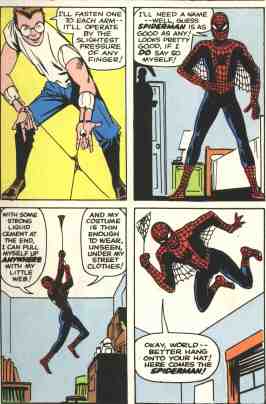
Well, graduation arrives, and my tour-group friends go to prominent (in-state) universities, and I could have gone, too, for I had scholarships as well, but...see, I had a full scholarship to the nearby community college, and my sister was only two years younger than I (and still is), and she'd be needing to go to college, too, and my parents weren't rich (at the time, my father an accountant and my mother an elementary school assistant teacher), and...well, you know. You do what you have to do, right? I mean, what would Peter Parker have done? Okay, Peter Parker would have come in first in his class, not third, and he ended up getting a full-scholarship to a major university, not a community college, but still...if he had not been as smart as he was...okay, then, he never would have become Spider-Man, because he wouldn't have been able to invent those web-shooters and develop that web-fluid...but, even if he had never become Spider-Man, then what would he have done in my situation? Okay, he wouldn't, 'cause romance comics were a dying breed in '62, and Stan Lee, Steve Ditko, and Martin Goodman would never have wasted space in a soon-to-be-cancelled sci-fi/monster comic to tell the tales of a high-school loser who never made it with a lady till the boys up and go to the university while he's stuck in some two-bit, hick, junior college, with more of the people from whom he was trying to distance himself. But what if?


I tell you what if: Peter Parker would have bitten the proverbial bullet and gone to that two-bit junior college and saved his parents--who loved him so--the worry of where they were going to come up with the funds. He wouldn't even complain about it (other than in thought balloons). So, I took the Peter Parker route. I went to the nearby community college, and I never told my parents how much I truly hated the idea.* And you know what? For the most part, I loved that two-bit junior college.

I even joined the marching and concert band there, as well as the college's official pop/rock band. I wasn't a talented enough drummer to play the trap-set for 'em, though, so instead, I joined as a technician (which was a euphemism for a roadie), and I was deigned to be in charge of setting and striking the keyboard and its amp, stand, etc....After several shows, I noticed that the band's keyboard player didn't play too many solos, so I asked the director why she didn't, because she was an incredibly skilled player (even had a partial scholarship to Juliard, but had to turn it down due to lack of funds to pay for the entire tuition there). The director told me that primarily, the piano was a percussive instrument, and that's how he primarily used it. I then remembered back to elementary school music class, to the charts on the wall, and I remember seeing the picture of the piano underneath the percussion heading. Funny, I thought then, that I'd forgotten something so basic. The piano as percussion: okay, then, I see it. I think of Little Richard and Jerry Lee Lewis and Elton John (in his earlier, more straight-ahead rockin' tunes), and I hear it: the piano cuts a groove. And no modern white rock and roll band can cut a straight groove the way Spoon can.

Spoon has been around for a little over ten years, and their records have progressively improved, but their strong sense of the importance of groove was always present (in large part due to their modern-day Charlie Watts drummer, Jim Eno); in their own way, they're a blues-pop band, with the blues coming from their repetitive rhythms, struck first, unrelenting and insistent. If any band can compare closely to the Rolling Stones, it's Spoon. The Black Keyes hue closer to Zeppelin than the Stones do, and the White Stripes--well, they're their own beast, but Spoon--just like the Stones did--takes blues and R&B rhythms and craft simple, catchy melodies around them, though their melodies never overtake their base, their center. For variation on their sound, Spoon often pulls in sounds from disco (where the Stones pulled in sounds from country music), and--in "The Underdog"--supper-club jazz and mariachi.

Of course, Spoon begins the song with a rhythm guitar, band co-leader Britt Daniel strumming away sixes in four-four time, all designed to start the head bouncing to the beat, and then the bass comes in (more rhythm), and then throughout the rest of the song, Spoon throws in some mariachi/supper-club horns, finger snaps, stick beats (or are those--I mean, really--spoons?), and hand claps on the off beat. It all sounds like early, "Only the Good Die Young"-era Billy Joel, and that's a great thing. The song's open and loose and fresh, and it's lyrics could be about the Bush administration, could be (and probably is) about the record industry, could be about corporate big-wigs of any nomenclature or denomination, about sticking it to the man, about sticking to one's guns, about the courage of one's convictions, about appreciating artistry and honest work, about a lack of pretentiousness, about not following trends, about being true to one's self, about never forgetting the hard-working folks who enable us to do what we're now able to do, about never hiding one's musical taste or regional accent just to appease those who probably wouldn't like you no matter how you sounded or what you listened to, as opposed to those who'd been accepting you just the way you were for as long as you can remember, and about--and I had to say it--great responsiblity.


NOTES*
Of course, I probably did tell them, and I probably whined, but ever since my horrendous car-crash of 1990--where I'd broken my neck in three places and caused severe bleeding between the hemispheres of my brain--my memory doesn't serve me as well as it should, so I'm probably imagining myself to be have had more integrity then than I truly possessed. And, you know, I find that happens often, that I see myself as more heroic than I truly am or truly ever was. That's what years of reading superhero comics will do for you.

Monday, February 23, 2009

The 333 Best Pop Songs of the 2000s: #173

#173: "Dashboard" (2007) - Modest Mouse

It was early fall in 1992, and I was sitting at my apartment in Starkville, and--for reasons I forget--I was depressed. I needed someone, something to cheer me up, so I decided to drive about one-hundred miles south to Meridian to visit a friend who was always good for a laugh or for a pick-me-up, for if she was in one of her depressed conditions, listening to her would make me feel better about my life, 'cause--hey--at least my life's not hers. I grabbed my keys and walked outside, and the wind was blowing strong, and it was raining, but I'd driven in storms before, right? What's another one? Even if it was Hurricane Andrew?

Right before I left my apartment, I called the radio station, requesting Jackson Browne's "Running on Empty." The DJ told me that he didn't like Jackson Browne, that he was sure I could ask my grandparents for a copy of the eight track. Sigh. I pleaded my case, and he said he'd play it if I promised to cry to my mother instead of the radio station the next time I felt jilted by life. I hung up. Damn radio-station DJs. I left my apartment, jumped in my car, and started driving, and five minutes later, he played it. Damn radio-station DJs. The song lifted my spirits, giving me enough will to make the long, late-night drive in inclement weather.

Inclement weather? Huh. Now, the first two-thirds of the trip south on 45 wasn't so bad, but about fifteen miles (or so) from Meridian, visibility began to decrease near zero, even with the wipers on full-blast. The rain and water started to blow across the highway in sheets and waves, and then I began to hydroplane. I couldn't control my little Sunbird, and it slipped off into a deep ditch off the shoulder. And it got stuck immediately.

I opened the door, looked at the tires, and I realized that moving the car was impossible, so I had two options: stay in the car, or walk to that convenience store I passed a couple/three miles back to use the pay phone. I was too close to my destination to give up, so walked up the ditch to the highway, stood in the middle (there was no other traffic, and there hadn't been any my whole trip...go figure), and screamed and screamed and screamed. And I felt better. I then walked down the middle of the highway, back to that convenience store, with the rain whipping me from my right, making it very difficult to walk quickly (and impossible to run).

Finally, exhausted, I arrived at the store, and--of course--the pay phone wasn't covered...but it worked. I called my friend. No answer. I called again: no answer. I knew I couldn't just stay there at the store, and I didn't think I could walk those miles back to my car, not right then, not in the rain. I couldn't call my parents, either. One, they were too far away, and two, I couldn't tell them of my situation. They wouldn't understand my decision. They'd think it was stupid and irresponsible. Funny, that.

Anyway, I decided to call my cousin Terry (who lived in Meridian). He wasn't the happiest camper when I woke him (for it was after midnight), but he did say he'd come get me. Fifteen minutes later, he was there, and--bless him--he didn't even make me take off my drenched clothing before getting in his sparkling-clean Corvette. As we drove toward town, we passed my car, and I asked him if we could call a tow truck when we got to his house. He just laughed, telling me that no one with half a brain would get out in weather like this, not even for hundreds of dollars. He told me just to wait till morning, that nobody was going to steal my car between now and then. Yeah, I told him, I knew that, but what about my stereo?

Stereo? See, I had my stereo and speakers and tapes in my trunk. The night before, I'd packed them before I left home to drive up to Starkville, and I had yet to unpack them. I asked Terry
if we could at least stop and at least let me retrieve them, and he just laughed again, saying that they'd be alright in the trunk till morning.

Well, morning rolled around, and I called a tow truck, and Terry drove me out to my car to meet the tow truck. He parked the car on the shoulder opposite where I'd wrecked the night before, and I stepped out of his car and walked across the highway. As soon as I reached the opposite shoulder, my heart sunk. The car's interior was full of water, up to within an inch of its ceiling. Utterly dismayed, I just hung my head. If Terry wouldn't have been there, I believe I would have cried. I walked down the embankment to peer inside. I opened the door and jumped out of the way, and grimy water just whooshed out.

For the second time in five minutes, I came close to crying, and I then recalled a time a few years previous, when I'd had to help pull an acquaintance out of a lake who went running in there after his car had rolled into it. I remembered that when we finally convinced him not to go back in after his vehicle, that he just plopped down on the bank and cried. I remembered my friends and I later laughing about him weeping, and then I started feeling worse because I'd made fun of someone in a time of personal crisis. I understood, now, how he'd felt. I'd just entered the fourth stage of grief. For a car. And a stereo.

Those two items seem to be silly things over which to grieve (okay, maybe not the car), but material possessions do matter. It's not all internal, is it, the important aspects of life? I mean, objects aren't as important as, say, love is, are they? In a way, they are. Maslow believed so. After the basic physiological needs (air, water, food, etc...), then next comes safety, and that includes safety of property. Really, it does, even moreso than love (though, conversely, not moreso than sex). Of course, it almost goes without saying that property here means shelter, but whynot a vehicle, an essential means of transportation, an essential means--for many--of being able to keep a job that provides the means of sustenance, the primary need. So, I'm sure that you'll give me the car. But the stereo? Even Abraham Maslow would laugh at that. Right?

I don't think so. A stereo provides music, which--for many (though not most) of the post-Baby Boom generation--gives some of us ne'r-do-wells if not a reason for living, then an aural shelter from the emotional storms of our lives. Popular (and that qualification is important here) music is often viewed solely as entertainment, as escapism. Well, popular music is those things, sure, but it is not solely those things, no. Popular music isn't merely escapism; often, popular music is an escape. It's an escape from the vagaries of life, from the heartaches, from the tiny tortures that some of us can't endure as well as others. It can instill confidence (however briefly), and it can provide self-esteem. It can soothe, and it can heal, and it can inspire. What it can't do, though, is breathe underwater.

Which leads us to "Dashboard," by the indie-cum-mainstream band Modest Mouse, whose sound has evolved over the past ten years from poorly-produced Pavement sound-alikes to one of the funkiest rock bands around. In this song, nasal and manic band leader (and singer/songwriter/guitarist) Isaac Brock hews close to his one of his main lyrical themes: traveling. Here, Brock uses the lack of the ability to travel as a metaphor for the power of positive thinking. Okay, so Brock isn't Norman Vincent Peale; in fact, he's more like Alfred E. Newman. "At least it wasn't quite as/Bad as," he sings, for it could always be worse. Let's look on the bright side: "Oh, the dashboard melted/But we still have the radio" and "The windshield was broken/But we have the fresh air, you know." You know...if Brock had sung that to me the night I had my wreck, I'd have punched him.

Okay, I wouldn't have punched him, but I'd have thought about it. The twit--he just better be glad he's got The Smith's former guitarist Johnny Marr laying down down those funky chicken-scratch fills, and the Dirty Dozen Brass Band punching up and punctuating the verses, and those Philly-Soul strings sweeping the instrumental breaks breezily along the way, and his own mushmouth, slobbery, Sylvester-the-Cat vocals, fluctuating up and down the scale, completely attuned to the beat, creating rhythms all on his own. 'Cause if he didn't have all that behind that stupid message of his, then this song--dashboard, radio, stereo, tapes, and all--would just sink into the abyss of the hurricane water-filled ditch off Highway 45, and not even Jeremiah Green--Modest Mouse's drummer, one of the best pop-rock drummers of this generation, always attuned to the groove, no moreso than on this song--could tow this one from the depths.